
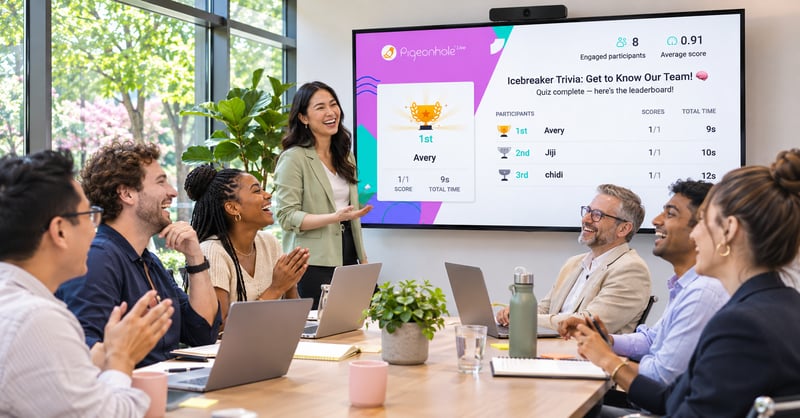
The first few minutes of a meeting can feel a little awkward. A few colleagues might be catching up, others are checking their emails, and those joining remotely are waiting for someone to get things started.
So how do you bring everyone into the conversation?
A good icebreaker gives your attendees an easy way to participate, get to know one another and feel more comfortable contributing throughout the meeting. Sometimes, all it takes is a simple question and 60 seconds.
Creating these opportunities for connection is particularly relevant today. According to Gallup's State of the Global Workplace 2026 report, only 20% of employees worldwide are engaged at work, the lowest level since 2020.
While employee engagement takes sustained effort across an organisation, your meetings offer a regular opportunity to help colleagues feel heard, included and connected to their teams.
Whether you're hosting a weekly team meeting, welcoming new colleagues or presenting at a company-wide all-hands, here are 20 fun icebreakers for meetings that you can easily adapt to your audience, agenda and available time.
What are icebreakers for meetings?
Icebreakers for meetings are short questions, games or interactive activities that help attendees feel comfortable and ready to participate. They typically take between one and ten minutes and can be used in face-to-face, virtual and hybrid meetings.
Common meeting icebreakers include quick polls, word clouds, trivia quizzes, personal check-ins and collaborative problem-solving activities.
The best icebreakers are easy to understand, require little preparation from participants and give everyone a comfortable way to contribute.
Why should you start a meeting with an icebreaker?
Think about the last meeting where you spent 30 minutes listening before being invited to contribute. How comfortable did you feel speaking up when the opportunity finally came?
An icebreaker gives your attendees an earlier opportunity to participate. Depending on the activity you choose, it can help you:
- Build connections between colleagues who rarely work together.
- Encourage quieter team members to contribute.
- Help remote attendees feel included.
- Understand how your team is feeling before an important discussion.
- Introduce a meeting topic in an approachable way.
- Create a more welcoming environment for new employees.
- Encourage creative thinking before a brainstorming session.
At Pigeonhole Live, we believe the first interaction in a meeting sets the expectation for how everyone can participate throughout the rest of it.
Give your attendees an easy way to contribute early, acknowledge their responses and build on what they share. This establishes participation as a natural part of your meeting.
20 meeting icebreakers at a glance
Short on time? Use this table to find an icebreaker that suits your meeting.
| Icebreaker | Duration | Suggested group size | Best for |
|---|---|---|---|
| 1. Mood cloud | 1 to 2 min | Any size | Quick check-ins |
| 2. Image poll | 1 to 2 min | Any size | All-hands meetings |
| 3. Would you rather? | 2 to 3 min | Any size | Cross-functional teams |
| 4. Trivia quiz | 3 to 5 min | Any size | Energising meetings |
| 5. Who said it? | 3 to 5 min | 5 to 50 | Getting to know colleagues |
| 6. Never have I ever | 3 to 5 min | Any size | Onboarding |
| 7. One-word game | 1 to 3 min | Any size | Brainstorming |
| 8. This or that | 1 to 3 min | Any size | Large or unfamiliar groups |
| 9. Appreciation time | 3 to 5 min | Any size | Employee recognition |
| 10. Highlight of the week | 3 to 5 min | 3 to 20 | Recurring team meetings |
| 11. Recommendation swap | 3 to 5 min | Any size | Building connections |
| 12. My first job | 3 to 5 min | 5 to 30 | New and cross-functional teams |
| 13. Customer perspective | 3 to 5 min | Any size | Strategy meetings |
| 14. One problem, one idea | 3 to 5 min | Any size | Problem-solving |
| 15. Forced association | 3 to 5 min | 5 to 30 | Creative workshops |
| 16. Six thinking hats | 5 to 10 min | 6 to 30 | Decision-making |
| 17. Career milestone quiz | 3 to 5 min | Any size | Employee introductions |
| 18. Ask your leader anything | 5 to 10 min | Any size | Town halls and all-hands |
| 19. Company history quiz | 3 to 5 min | Any size | Company celebrations |
| 20. Two truths and a lie | 5 to 10 min | 3 to 20 | Team building |
These durations and group sizes are suggested starting points. Digital polls, quizzes and word clouds can help you adapt many of these activities for larger audiences.
Quick icebreakers for meetings
These activities take five minutes or less and require minimal preparation. They're particularly useful when you have a full agenda and want to involve your attendees from the beginning.
1. Mood cloud
Best for: Hybrid meetings, all-hands and weekly team check-ins.
Duration: 1 to 2 minutes.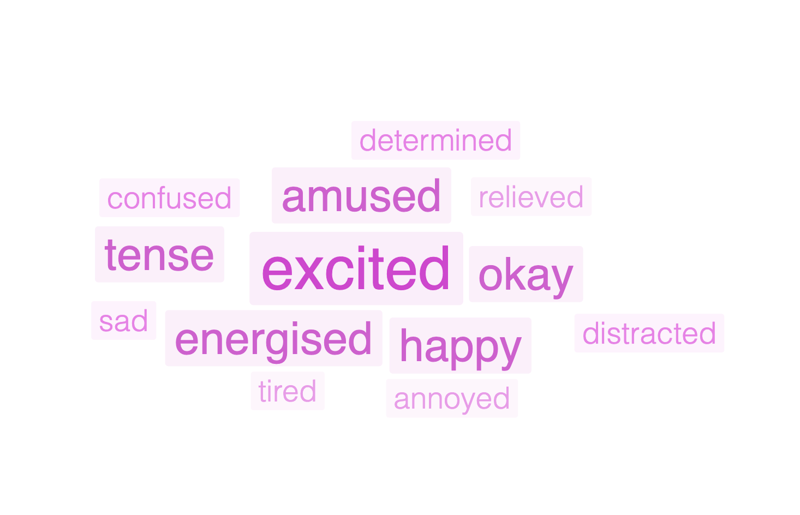
Before you begin your presentation, invite everyone to describe how they're feeling in one word. Collect their responses in a live word cloud and display the results as they come in.
You could ask:
- How are you feeling today?
- What's your energy level in one word?
- What's been on your mind this week?
- What word best describes your Monday?
As more participants submit the same word, it becomes larger in the word cloud, giving you a quick visual representation of the group's responses.
Pay attention to what comes up. If words such as "overwhelmed" or "exhausted" appear frequently, acknowledge them. You might choose to simplify the agenda, allow more time for questions or follow up with your team afterwards.
Facilitation tip: Allow anonymous responses where appropriate so colleagues can share how they feel without having to explain themselves publicly.
2. Image poll
Best for: Large meetings and audiences with varying levels of familiarity.
Duration: 1 to 2 minutes.
Sometimes it's easier to choose a picture than to find the right words.
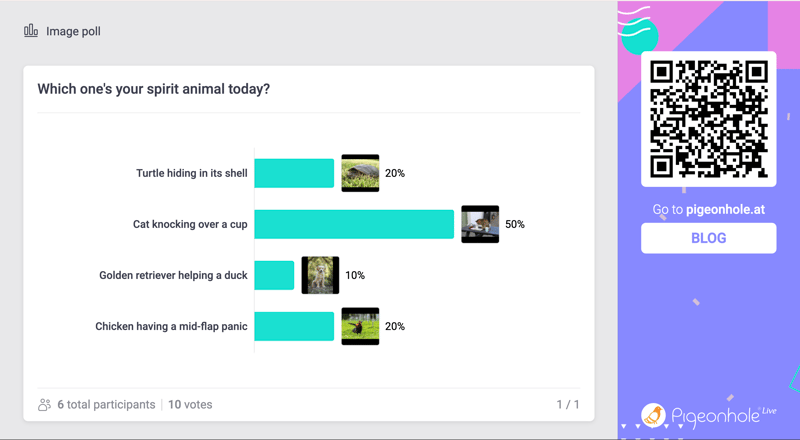
Create a multiple-choice poll with four or five images and invite your attendees to vote for the one they identify with most.
For example:
- Which animal best represents your energy today?
- Which holiday destination would you choose right now?
- Which weather image describes your week?
- Which fictional character would make the best project manager?
Reveal the results once everyone has voted and invite a few volunteers to explain their choices.
Image polls are particularly useful at international meetings because a simple visual question can reduce language barriers.
3. Would you rather?
Best for: Cross-functional meetings and newly formed teams.
Duration: 2 to 3 minutes.
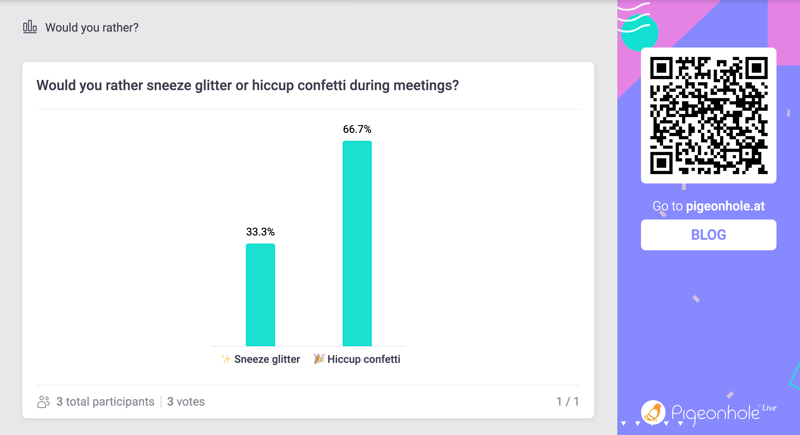
Give your attendees two options and ask them to choose their preference. The more imaginative the choices, the more interesting the conversation can become.
Here are a few questions to try:
- Would you rather speak every language or play every musical instrument?
- Would you rather start work earlier or finish work later?
- Would you rather have a personal chef or a personal driver?
- Would you rather have unlimited books or unlimited travel?
- Would you rather spend a week in the mountains or by the sea?
You can also tailor the questions to your meeting topic. Before a project planning session, for example, ask whether colleagues would prefer more time to explore ideas or more time to refine the final solution.
Use their answers to introduce the discussion.
4. Trivia quiz
Best for: All-hands, departmental meetings and company celebrations.
Duration: 3 to 5 minutes.
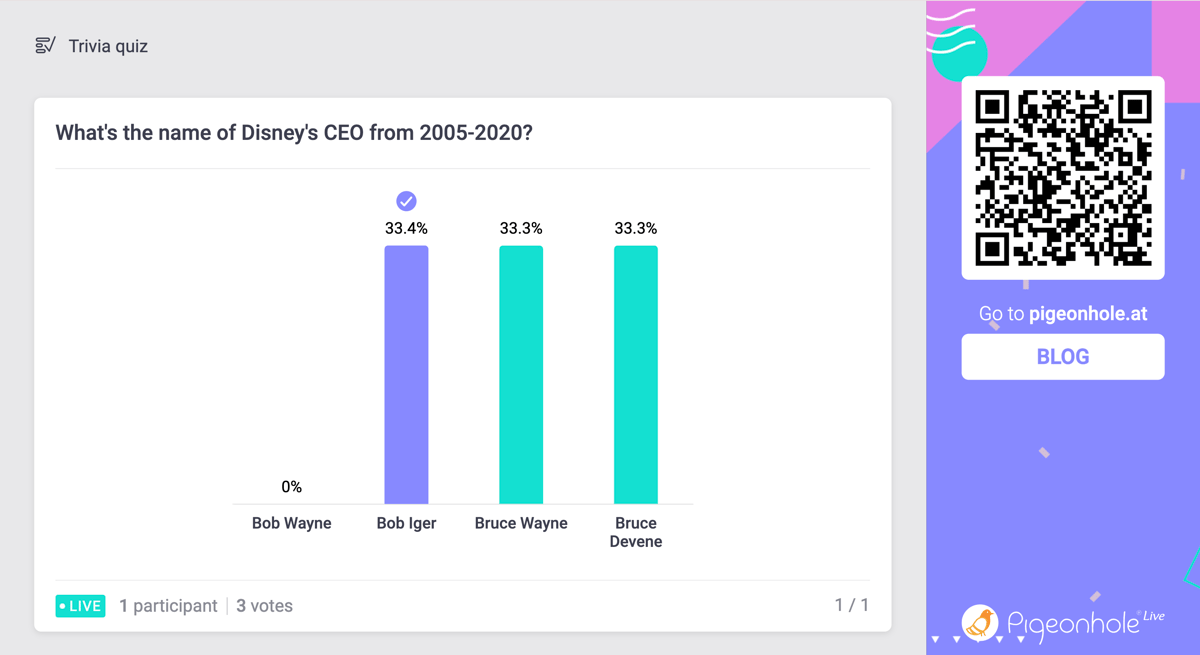
A short trivia quiz can introduce some friendly competition before a meeting begins.
Prepare three to five questions on a theme that your attendees can enjoy, such as general knowledge, geography, music, food or interesting facts about your industry.
For example:
- Which planet has the shortest day?
- How many hearts does an octopus have?
- What is the largest ocean in the world?
Reveal each answer and share an interesting fact where appropriate.
With Pigeonhole Live, you can run an interactive Quiz with a live Leaderboard that ranks participants based on the accuracy and speed of their answers!
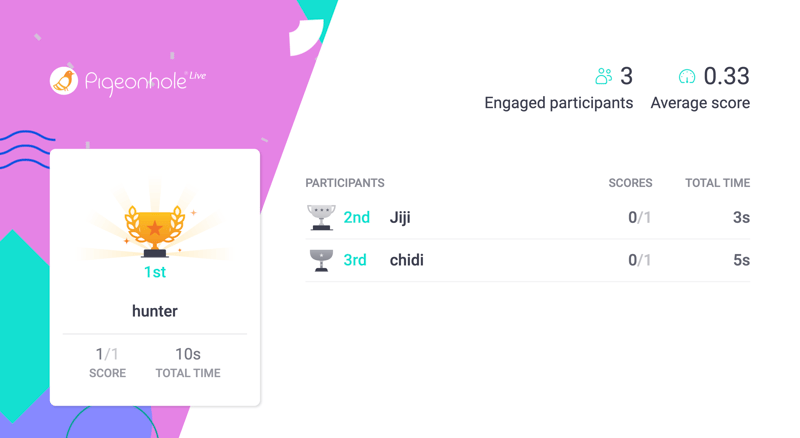
Facilitation tip: For an international audience, choose questions from a range of cultures and subjects so more participants have a fair opportunity to succeed.
5. Who said it?
Best for: Teams getting to know one another.
Duration: 3 to 5 minutes.
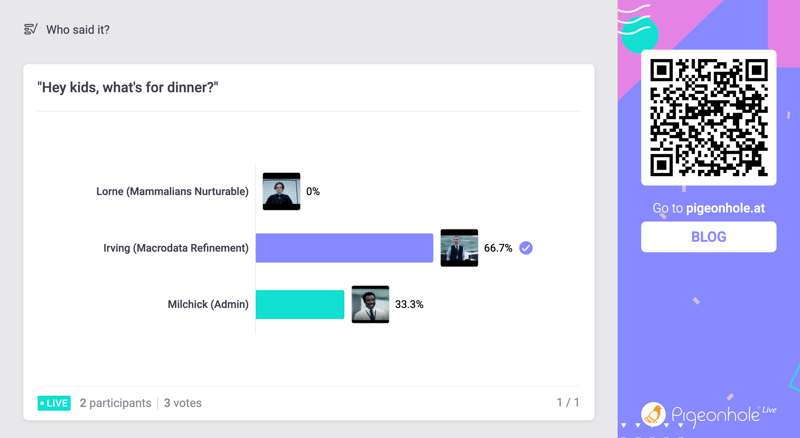
Before your meeting, ask a few colleagues to share a memorable quote, favourite saying or interesting personal fact.
Turn their submissions into a multiple-choice quiz and invite everyone to guess which colleague said what.
For example:
- "I've visited 25 countries and counting."
- "My first ambition was to become a marine biologist."
- "I make my own pasta every Sunday."
After revealing each answer, invite the colleague to share a little more about their story.
Make sure everyone featured in the quiz has agreed to share their responses.
Fun icebreakers for team meetings
If your team meets regularly, changing your opening activity can help colleagues discover new things about one another and create opportunities for conversations beyond their usual responsibilities.
6. Never have I ever
Best for: Onboarding, informal team meetings and team-building sessions.
Duration: 3 to 5 minutes.
Present a series of light-hearted statements and invite participants to indicate whether they've ever done them.
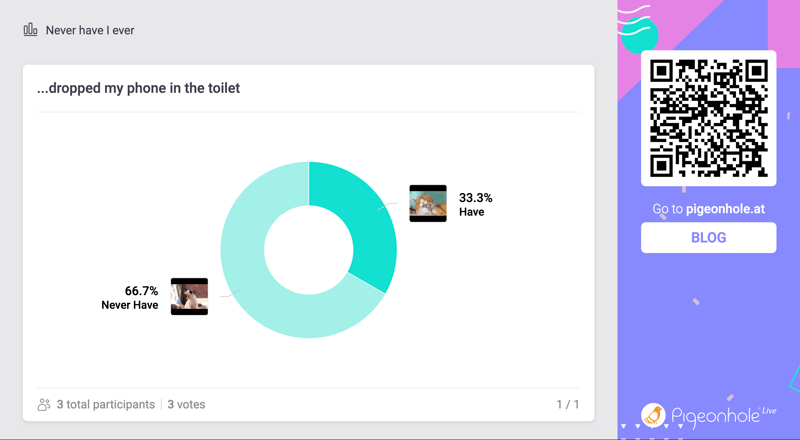
Try these workplace-friendly prompts:
- Never have I ever learnt a musical instrument.
- Never have I ever made bread from scratch.
- Never have I ever travelled alone.
- Never have I ever joined a video call with the wrong background.
- Never have I ever finished a book in one day.
You can run each statement as a quick poll with two options: "I have" and "I haven't".
Choose prompts that allow colleagues to share as much or as little as they're comfortable with. Keep questions about health, finances, relationships and other personal matters out of the activity.
7. One-word game
Best for: Brainstorming, planning meetings and workshops.
Duration: 1 to 3 minutes.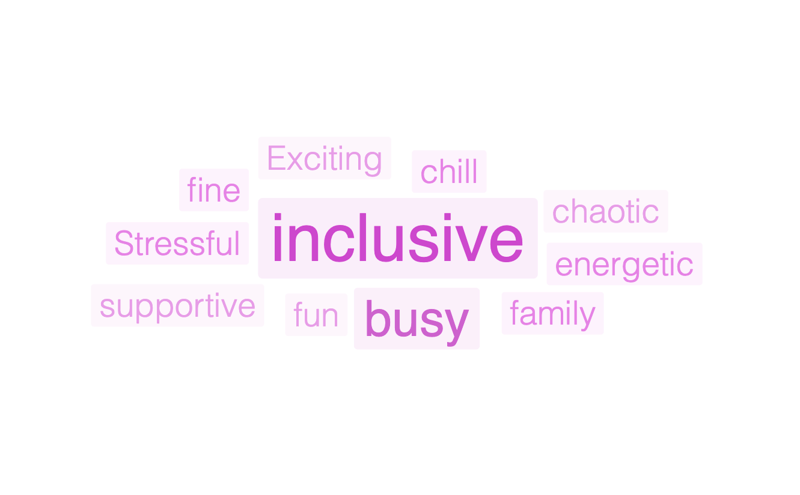
While a mood cloud helps you understand how your colleagues are feeling, the one-word game helps you explore how they think about a particular topic.
Introduce a subject related to your agenda and ask everyone to describe it using a single word.
For example:
- What does excellent customer service mean to you?
- What's one word you'd use to describe our team?
- What quality matters most in a good leader?
- What should our biggest priority be next quarter?
Display the responses in a word cloud and discuss any recurring themes.
This is a particularly useful icebreaker before a strategy session because you can gather a range of perspectives before the main discussion begins.
8. This or that
Best for: Large meetings, international teams and groups meeting for the first time.
Duration: 1 to 3 minutes.
Ask your attendees to choose between two everyday preferences.
You could try:
- Coffee or tea?
- Sunrise or sunset?
- Books or films?
- Sweet or savoury?
- Detailed planning or spontaneous decisions?
- Working independently or collaborating in a group?
Run three to five quick polls and reveal the results after each question.
This activity works particularly well for large groups because participants can contribute simultaneously without having to introduce themselves or speak in front of everyone.
9. Appreciation time
Best for: Team meetings, all-hands and employee recognition.
Duration: 3 to 5 minutes.
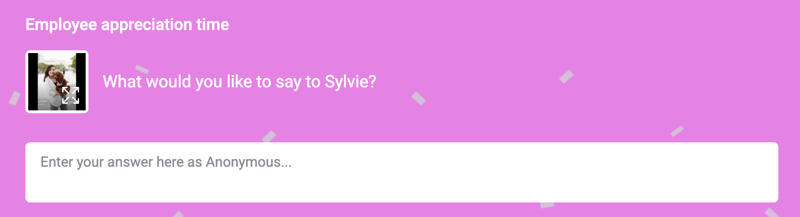
Give your colleagues a dedicated moment to recognise someone who has helped them.
Ask a question such as:
- Who helped you overcome a challenge recently?
- Which colleague taught you something new this month?
- What contribution from another team made your work easier?
- Who would you like to thank today, and why?
Collect responses through an open-ended poll and share a selection with the group.
Encourage colleagues to describe specific contributions. A message thanking someone for helping resolve a difficult customer issue is often more meaningful than a general compliment.
Over time, appreciation time can become a regular opportunity to recognise work that might otherwise receive little attention.
10. Highlight of the week
Best for: Weekly team meetings and regular check-ins.
Duration: 3 to 5 minutes.
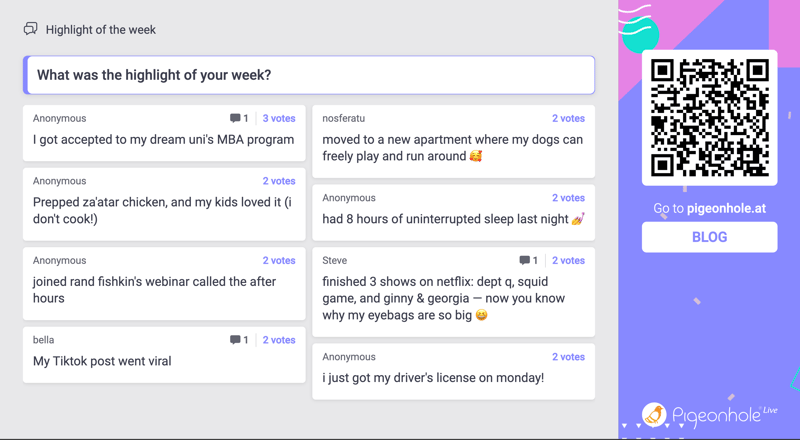
Invite everyone to share one positive moment from their week. It could be a small accomplishment, something they've learnt or an experience outside work.
You might ask:
- What's one thing you're proud of this week?
- What's something that went better than expected?
- What's one small win worth celebrating?
- What did you learn this week?
For a small team, give each colleague around 30 seconds to share. For a larger team, collect responses through an open-ended poll and invite a few volunteers to elaborate.
You can also use this activity at the end of a meeting to close the discussion on a positive note.
11. Recommendation swap
Best for: Recurring meetings and distributed teams.
Duration: 3 to 5 minutes.
Give your colleagues an opportunity to recommend something they've recently enjoyed or found useful.
You could ask for:
- A book worth reading.
- A podcast worth listening to.
- A useful productivity tool.
- A restaurant or recipe worth trying.
- A useful skill or shortcut they've recently learnt.
Collect recommendations in an open-ended poll or your meeting chat, then share the responses afterwards.
This icebreaker has the added benefit of giving your attendees something useful to take away from the meeting. It can also encourage conversations between colleagues with shared interests.
12. My first job
Best for: Onboarding, leadership introductions and cross-department meetings.
Duration: 3 to 5 minutes.
Ask everyone to share what their first job was and one thing they learnt from it.
You'll often discover unexpected experiences among colleagues whose professional backgrounds you thought you knew.
Someone who works in finance today might have started out as a waiter. Your engineering manager might have spent their first summer working in a bookshop.
For larger groups, collect responses digitally and invite a few volunteers to share their stories.
You can also adapt this activity with questions such as:
- What was the first skill you learnt at work?
- What did you want to be when you were younger?
- What's one piece of career advice you'd give your younger self?
Icebreakers for brainstorming and strategy meetings
Your opening activity can help participants start thinking about the subject you'll discuss. These icebreakers encourage curiosity, creativity and collaboration while giving your meeting a clear direction.
13. Customer perspective
Best for: Product planning, marketing and cross-functional strategy meetings.
Duration: 3 to 5 minutes.
Ask your colleagues to imagine a situation from your customer's perspective.
Introduce a simple prompt:
- What's one thing our customers wish were easier?
- What might frustrate someone using our product for the first time?
- If you could solve one problem for our customers today, what would it be?
Give everyone a minute to think independently before submitting their responses.
Display the ideas and identify any recurring themes that could inform the subsequent discussion.
This is a useful way to involve colleagues from different departments, particularly those who may have different levels of direct customer interaction.
14. One problem, one idea
Best for: Project kick-offs, planning meetings and problem-solving sessions.
Duration: 3 to 5 minutes.
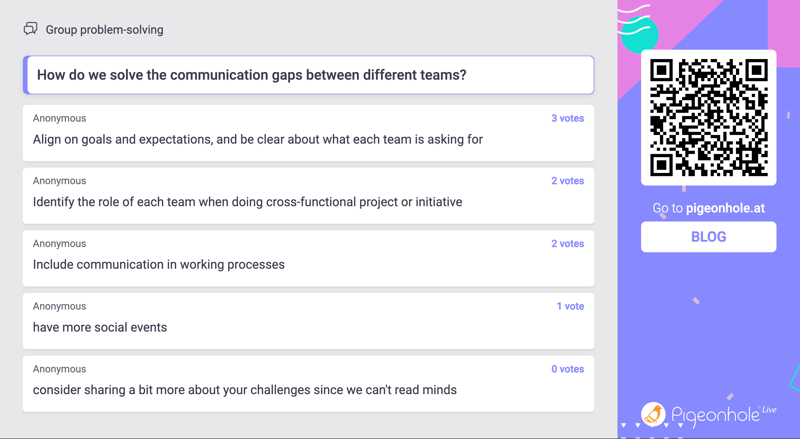
Present a specific challenge and invite everyone to suggest one possible solution.
For example:
- How could we reduce the time spent in recurring meetings?
- How could we make onboarding easier for new colleagues?
- What's one change that would improve collaboration between departments?
- How could we make our customer communications clearer?
Collect responses before opening the discussion.
You can then invite participants to upvote the ideas they'd like to explore further.
Giving everyone time to think independently helps you gather perspectives before the conversation becomes influenced by the first few participants to speak.
15. Forced association
Best for: Creative workshops, product development and marketing meetings.
Duration: 3 to 5 minutes.
Forced association is a creative thinking exercise that involves finding connections between two seemingly unrelated things.
Choose an everyday object and ask your colleagues to connect it to the subject of your meeting.
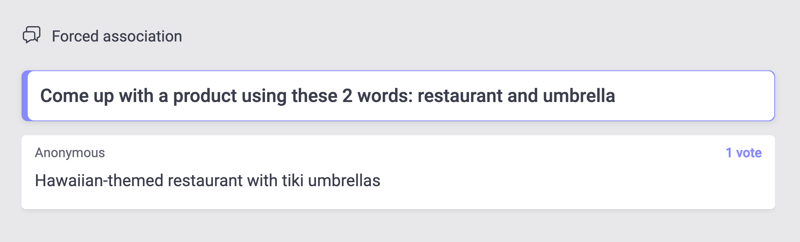
For example:
- What could a library teach us about organising company knowledge?
- What could a restaurant menu teach us about simplifying our product pricing?
- How could an airport improve the way we onboard new customers?
- What could a traffic light teach us about managing projects?
Give participants two minutes to think of a connection, then collect their ideas and discuss a few of the most interesting responses.
The activity encourages your team to approach familiar challenges from a different perspective.
16. Six thinking hats
Best for: Decision-making, strategic planning and complex discussions.
Duration: 5 to 10 minutes for a simplified opening exercise.
Developed by Edward de Bono, the Six Thinking Hats method encourages participants to examine a subject through six different thinking approaches.
| Thinking hat | Perspective | Example question |
|---|---|---|
| White | Facts and information | What do we know? |
| Red | Feelings and intuition | How do we feel about this? |
| Black | Risks and caution | What could go wrong? |
| Yellow | Benefits and opportunities | What could go well? |
| Green | Creativity | What alternatives could we explore? |
| Blue | Process | What should we do next? |
For a short meeting opener, choose one or two hats relevant to your agenda.
Before a discussion about launching a new product, for example, you could ask your team to identify potential opportunities using the yellow hat, followed by possible risks using the black hat.
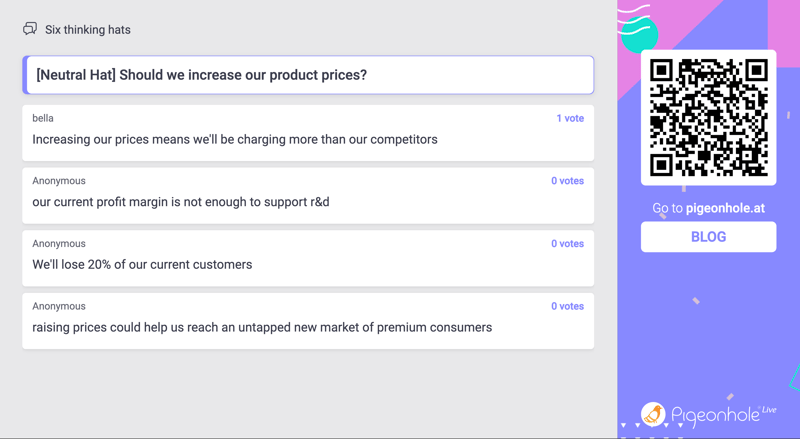
Collect responses through open-ended polls and use them to introduce the main conversation.
Save the full six-hat exercise for a longer workshop where you have enough time to explore each perspective.
Icebreakers for all-hands and hybrid meetings
Larger meetings bring together colleagues from different departments, locations and levels of seniority. Your icebreaker needs to accommodate these differences while keeping the meeting on schedule.
Activities that allow everyone to participate simultaneously are especially useful!
17. Career milestone quiz
Best for: Employee introductions, leadership meetings and all-hands.
Duration: 3 to 5 minutes.
Invite a colleague to create a short quiz about their professional journey.
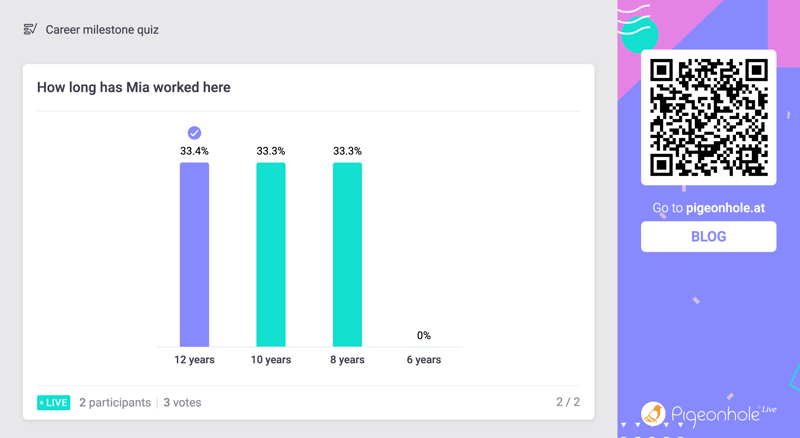
Questions could include:
- What industry did I work in before joining the company?
- What was my first professional qualification?
- Which country did I work in for three years?
- What was the first project I worked on here?
Let attendees guess the answers before inviting the featured colleague to share the story behind each one.
You can feature a different colleague or department at every all-hands meeting, giving employees a regular opportunity to learn about the teams they work alongside.
18. Ask your leader anything
Best for: Town halls, leadership meetings and company-wide all-hands.
Duration: 5 to 10 minutes.
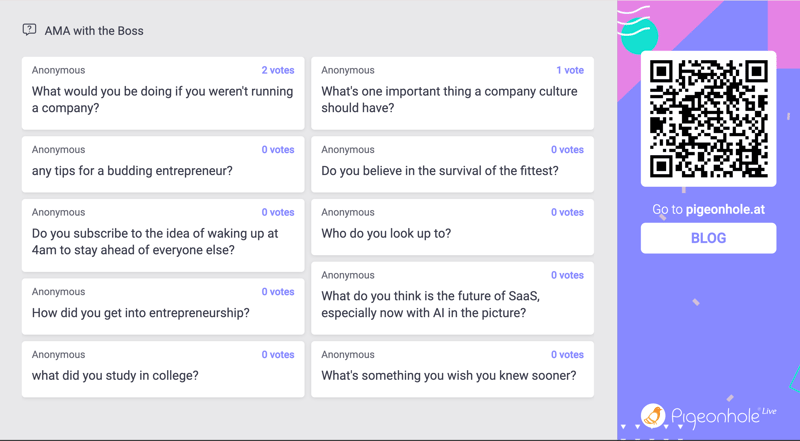
An informal Ask Me Anything (AMA) session can help employees get to know their leadership team before the main presentation begins.
Start with an invitation to submit light-hearted questions, such as:
- What's one professional habit you swear by?
- What's the best career advice you've received?
- What was your first leadership experience?
- What skill would you like to learn next?
- What's something about your role that might surprise us?
Use a live Q&A to collect questions and allow employees to upvote those they'd most like answered.
Anonymous question submissions can help employees who might feel uncomfortable addressing senior leaders directly.
You can also keep the Q&A open throughout the meeting so employees can submit more substantive questions as they arise.
19. Company history quiz
Best for: Company anniversaries, onboarding and all-hands.
Duration: 3 to 5 minutes.
How well do your employees know the organisation they work for?
Create a short quiz covering interesting company milestones, stories and achievements.
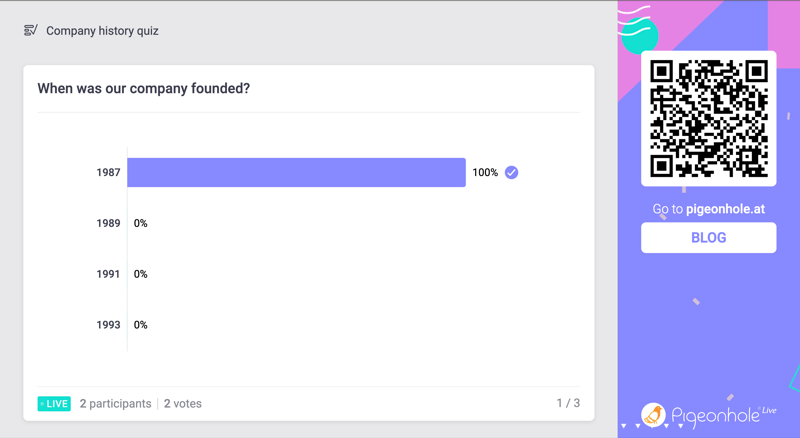
For example:
- Where was our first office located?
- When did we launch our first product?
- Which country became our first international market?
- What was our original company logo?
- Which year did we reach a particular customer milestone?
Include historical photographs or interesting stories when revealing the answers.
This is a fun way to share your organisation's history with newer employees while giving long-serving colleagues an opportunity to revisit shared memories.
20. Two truths and a lie
Best for: New teams, departmental meetings and cross-functional introductions.
Duration: 5 to 10 minutes.
Ask a participant to prepare three statements about themselves. Two should be true and one should be false.
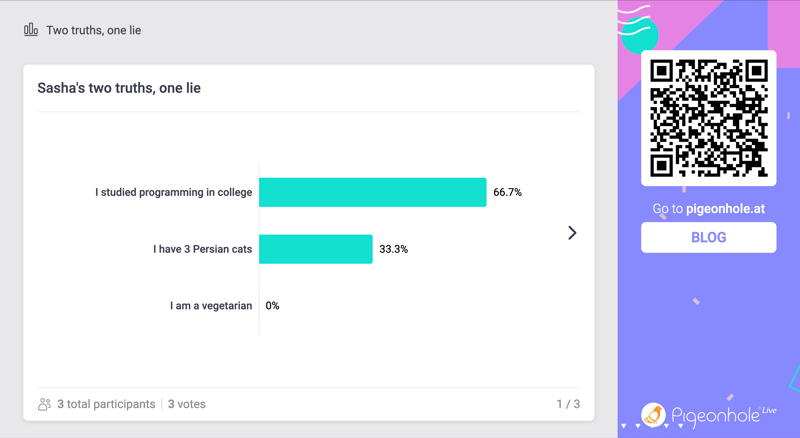
For example:
- I've completed a marathon.
- I've lived in four different countries.
- I once appeared in a television advertisement.
Invite everyone to guess which statement is false before revealing the answer.
For a company-wide meeting, you can adapt this activity to introduce different departments. Each department submits three statements about its work, achievements or responsibilities, and the audience votes for the false one.
This gives employees a better understanding of what other teams do while keeping the introductions light-hearted.
15 quick icebreaker questions for your next meeting
Need something you can use immediately without preparing a game? Choose one of these questions to open your next meeting.
For weekly team meetings:
- What's one small win you've had this week?
- What's something you've learnt recently?
- What are you looking forward to this week?
For virtual and hybrid meetings:
- Where are you joining us from today?
- What can you see from where you're working?
- What's one thing that helps you stay focused?
For getting to know colleagues:
- What hobby would you like to spend more time on?
- What's the most useful skill you've learnt outside work?
- What would your ideal weekend look like?
For creative and strategy meetings:
- What's one thing you'd simplify if you could?
- What assumption should we challenge today?
- What would success look like at the end of this meeting?
For all-hands meetings:
- What company achievement are you most proud of?
- What's one thing you'd like to learn about another department?
- What topic would you like us to cover at our next all-hands?
How to choose the right icebreaker for your meeting
A successful icebreaker starts with understanding your audience and what you want to achieve.
Consider the size of your audience
In a meeting with six colleagues, everyone can comfortably take turns speaking. In an all-hands with 600 employees, individual introductions would quickly consume your agenda.
For larger meetings, choose activities such as live polls, word clouds and quizzes that allow everyone to respond at the same time.
Think about how well your attendees know each other
When colleagues are meeting for the first time, start with simple questions that require little personal disclosure.
Established teams may feel more comfortable sharing personal stories, reflecting on challenges or discussing meaningful experiences.
Connect the activity to your meeting's purpose
If you're hosting a quarterly planning meeting, ask attendees what they think your biggest priority should be.
If you're introducing new employees, choose an activity that helps them find shared interests with colleagues.
A relevant icebreaker gives you a natural transition into your agenda.
Allow different ways to participate
Some colleagues enjoy speaking in front of a group, while others prefer having time to think and submit a written response.
Offer different ways to contribute, such as voting, typing a short answer, submitting a question or speaking voluntarily.
This is especially important for international teams, introverted colleagues and attendees joining remotely.
Keep it within your available time
A two-minute word cloud may be sufficient for a regular team meeting. A longer team-building workshop might benefit from a ten-minute activity.
Decide how much time you can dedicate to the icebreaker beforehand and prepare a clear way to bring it to a close.
The Pigeonhole Live approach: Invite, Respond, Connect
An icebreaker is most valuable when it establishes a two-way conversation between you and your audience.
Here's a simple three-step approach you can apply to almost any meeting.
1. Invite
Give everyone a clear invitation to participate. Explain the question, how they can respond and how much time they have.
Start with something easy enough that attendees can contribute without worrying about giving the wrong answer.
2. Respond
Acknowledge what your audience shares.
Comment on an interesting poll result, read out a few word cloud responses or invite a volunteer to explain an answer.
This shows your attendees that someone is paying attention to their contributions.
3. Connect
Use those responses to introduce the next part of your meeting.
For example, if your opening word cloud reveals that colleagues are concerned about upcoming deadlines, connect those concerns to your project planning discussion.
When attendees see their contributions reflected in the meeting, they have a clearer reason to continue participating.
You can repeat this approach throughout your meeting with live polls, Q&A, word clouds and other interactive activities.
How to make hybrid meeting icebreakers more inclusive
Hybrid meetings can create two very different experiences: one for colleagues in the room and another for those joining online.
Without a shared way to participate, remote attendees can miss conversations, struggle to contribute or feel disconnected from the group.
Here are five ways to give everyone a more inclusive experience:
- Use a shared participation channel. Allow in-person and remote attendees to respond through the same poll, word cloud or quiz.
- Make instructions visible. Display the question and participation instructions on your presentation slides.
- Give everyone time to respond. Allow sufficient time for remote attendees and colleagues who need longer to formulate their answers.
- Make cameras and speaking optional. Give attendees alternative ways to contribute.
- Share the results with everyone. Display responses both in the meeting room and through your screen share.
With Pigeonhole Live, attendees can join your interactive activities through a QR code or link using their phones or laptops. Everyone can participate from wherever they're joining, without downloading an app.
Common icebreaker mistakes to avoid
Even a well-intentioned icebreaker can make a meeting uncomfortable when the activity is poorly suited to the audience.
Watch out for these common mistakes:
| Common mistake | What to do instead |
|---|---|
| Asking overly personal questions | Choose accessible, low-pressure topics. |
| Making everyone speak aloud | Offer written responses or voluntary sharing. |
| Spending too long on an activity | Set a clear time limit and move into your agenda. |
| Using the same question every week | Rotate between different activities and formats. |
| Ignoring remote attendees | Provide a shared digital way to participate. |
| Choosing culturally specific questions | Use topics that an international audience can relate to. |
| Collecting responses without acknowledging them | Discuss the results and connect them to your meeting. |
Remember that some colleagues may prefer to observe before participating. Giving them that choice helps create a more comfortable environment for future interactions.
Frequently asked questions about icebreakers for meetings
What are some good icebreakers for meetings?
Good icebreakers for meetings include mood check-ins, word clouds, image polls, would you rather questions, trivia quizzes, two truths and a lie, and weekly highlights. Choose an activity based on your meeting's purpose, audience size and available time.
What are some good five-minute icebreakers for meetings?
A mood cloud, this or that poll, short trivia quiz, recommendation swap or highlight of the week can all be completed within five minutes. These activities require minimal preparation from attendees and work well before regular team meetings or presentations.
What are the best icebreakers for large meetings?
Live polls, word clouds and trivia quizzes are particularly suitable for large meetings because hundreds of attendees can participate simultaneously. For all-hands and town halls, company history quizzes and informal leadership Q&A sessions are also effective options.
How do you make a virtual meeting more interactive?
Start with a quick poll, word cloud or icebreaker question, then introduce further opportunities to participate throughout the meeting. You can use live Q&A, quizzes, surveys and reactions to encourage attendees to contribute without having to interrupt the speaker.
What are good icebreakers for introverts?
Anonymous word clouds, multiple-choice polls, written responses and individual reflection activities work well for attendees who prefer quieter forms of participation. Make speaking voluntary and give everyone enough time to think before responding.
How long should a meeting icebreaker last?
Most meeting icebreakers should last between one and five minutes. New team introductions, workshops and team-building sessions may benefit from activities lasting five to fifteen minutes, depending on the audience size and meeting objectives.
How do you make icebreakers less awkward?
Choose simple, relevant questions, explain the activity clearly and give attendees different ways to participate. Avoid overly personal topics, unexpected public speaking and activities that single out colleagues. You can also share your own answer first to demonstrate what's expected.
Should every meeting start with an icebreaker?
Icebreakers are particularly useful when introducing new colleagues, encouraging participation or preparing a group for collaborative discussion. For urgent or very short operational meetings, a quick check-in or a direct introduction to the agenda may be more appropriate.
What is the difference between an icebreaker and a team-building activity?
An icebreaker is usually a short activity that helps participants feel comfortable and ready to engage at the beginning of a meeting. A team-building activity typically takes longer and focuses on developing relationships, trust or collaboration over time.
What tools can you use to run interactive meeting icebreakers?
Audience engagement platforms such as Pigeonhole Live let you run live Polls, Word clouds, Quizzes and Q&A during in-person, virtual and hybrid meetings. Attendees can participate using their phones or laptops through a QR code or link, without downloading an app.
Give everyone a chance to participate
Your next meeting could begin with a simple question, a light-hearted poll or a word cloud that helps you understand how your team is feeling.
Choose an activity that suits your audience, give everyone a comfortable way to respond and take a moment to acknowledge what they share.
With Pigeonhole Live, you can add interactive Polls, Word clouds, Quizzes and Q&A to your existing PowerPoint or Google Slides presentations and involve your audience from the very first slide.
Ready to try your first interactive icebreaker?
Start for free with Pigeonhole Live!
